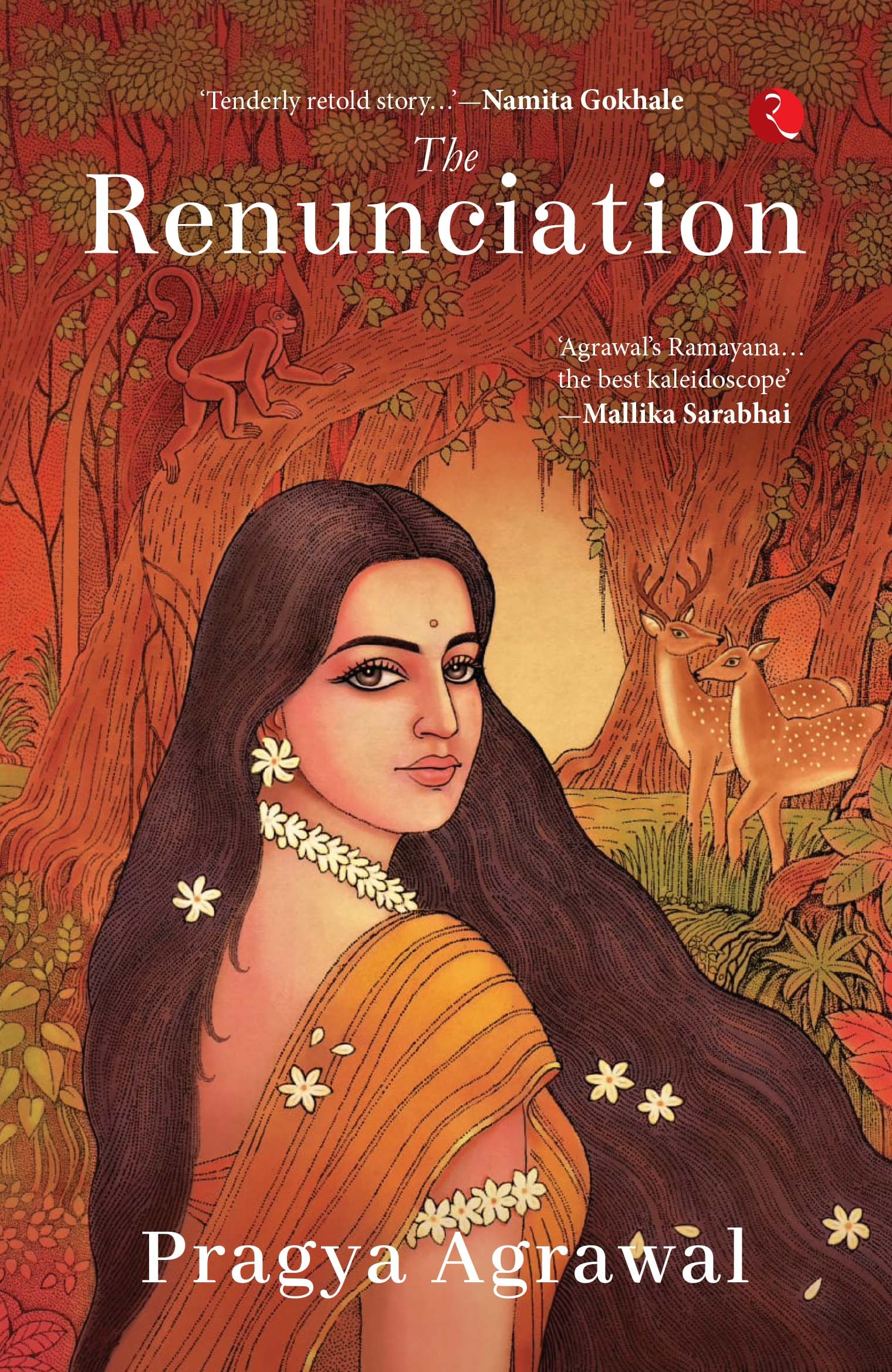
The Renunciation
Enveloped in the serene quiet of Sage Valmiki’s hermitage, Sita raises her twin sons with loving devotion, shielding them from the secrets of her extraordinary past – her true name, her divine origins, and her stained renunciation as the forsaken wife of Ram, the revered king of Ayodhya. The boys grow untouched by the burden she carries.
When Sage Valmiki leads them to sing in honour of that exalted king – a hymn to the father they have never known – Sita is seized by a fresh, sharp fear. Memories long buried surge back, unbidden and relentless. They are delicate fragments of her life with Ram, a love as profound as it was conflicted. Ram’s banishment of her had once been hailed as a noble sacrifice. But that was not the end. Now fate stirs again, kindling its merciless blaze. Sita must rise. She must face the implacable flames and salvage all that she holds dear.
This is the story of Sita. A story of revelations, reunions, and renunciations.
Author's
Note
The Ramayana is one of the oldest foundational epics of the Indian subcontinent, echoing through generations. For me, it first echoed in my grandmother’s resonant voice, where Sita appeared as a figure of grace and quiet strength. In my mother’s telling, her story arrived with questions—how a woman so resilient and deliberate came to be remembered as submissive? Years later, their voices found their way through me in The Renunciation.






Reviews
Reviews
Mallika Sarabhai
recipient of the Padma Bhushan, legendary classical dancer, actor, and social activist
‘Like a kaleidoscope, where a slight twist of the hand can totally change the picture, Agrawal’s Ramayana changes our perception in seemingly tiny ways. The impact is as dramatically different as the best kaleidoscope.’
Namita Gokhale
Sahitya Akademi Award-winning author, acclaimed writer, and co-founder of the Jaipur Literature Festival
This tenderly retold story of the earth goddess Sita and her twin sons Luv and Kush addresses the strength and vulnerability of her legacy. The foundational epic text of the Ramayana presents the complex moral dilemmas of the compulsions of kingship and the personal and domestic. Pragya Agrawal’s narrative evokes Sita’s resolute path through love and marriage, exile and abandonment.’